
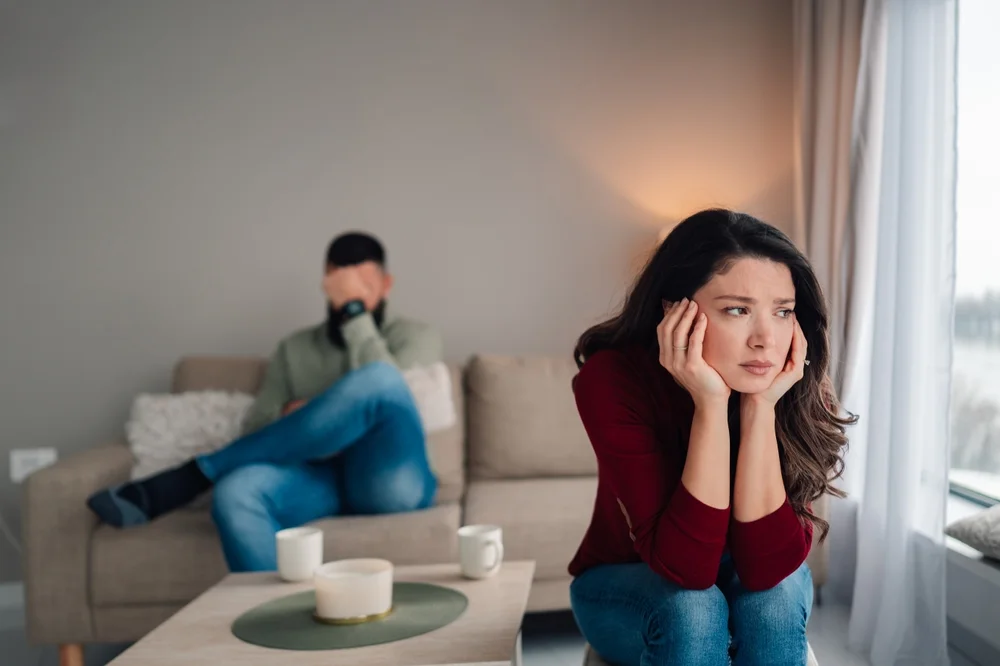
Many couples arrive at a clinician’s office carrying a deep sense of confusion. They sit on the couch and describe a dynamic that looks entirely functional from the outside. They manage the household, raise children, and coordinate schedules seamlessly. Yet, an undeniable heaviness lingers in the space between them. Often, one partner will say, “We don’t even fight that much. Why do I feel disconnected from my partner?”
This question highlights a profound misunderstanding of how relational health is measured. We are socially conditioned to believe that fighting is the primary symptom of a failing partnership. When voices are raised and doors are slammed, the distress is visible. But what happens when the distress is entirely silent?
Understanding the contrast between conflict vs emotional distance relationship dynamics is essential for identifying what is actually happening beneath the surface. Sometimes, the absence of friction is not a sign of peace. It is an indicator of absence itself.
Not All Relationship Problems Look Like Fighting
Why some relationships feel calm… but not connected
It is entirely possible to share a life, a home, and a bed with someone while feeling miles apart. Calmness in a partnership can sometimes be the byproduct of emotional safety and deep understanding. Other times, that calm is simply the result of two people no longer bumping into each other emotionally. They have learned to navigate around one another to keep the peace. The waters are still, but only because neither person is willing to step in and make a ripple.
When “we don’t argue” doesn’t mean things are okay
You might wonder, can a relationship have no conflict but still be unhealthy? The clinical answer is absolutely. When partners stop arguing, it is often assumed that they have resolved their issues. However, if that cessation of arguments is accompanied by a pervasive sense of loneliness, the issues have not been resolved—they have simply been abandoned. Avoiding disagreements to maintain a facade of harmony requires a massive amount of suppressed emotion. Over time, that suppression hollows out the relationship emotional disconnection taking root in the space where honest vulnerability used to be.
What Conflict Actually Represents in a Relationship
Conflict as engagement, not just disagreement
To understand distance, we must reframe how we view arguments. Conflict, fundamentally, is a form of engagement. When two people are arguing, they are actively attempting to be heard, understood, or validated by the other. They are turning toward the relationship, even if the method they are using is flawed or clumsy.
Why arguments often mean something still matters
A raised voice or a sharp disagreement is a signal of investment. It shows that the outcome of the interaction matters to the individuals involved. They care enough about the partnership, and their place within it, to expend the energy required to fight for a resolution. This is why asking is conflict healthy in relationships requires a nuanced answer. Healthy, productive conflict is a vital tool for growth. It indicates that both partners still believe the relationship is worth fighting for.
When conflict becomes repetitive or unproductive
Of course, not all engagement is constructive. When couples find themselves having the same argument repeatedly without resolution, the engagement turns corrosive. The emotional toll of these Conflict Cycles in Relationships can leave both individuals feeling unheard and battered. This unresolved friction is often the catalyst that pushes a couple out of active engagement and into the quiet territory of withdrawal.
What Emotional Disconnection Feels Like
The quiet distance that builds over time
Unlike a sudden blowout, a lack of emotional connection in relationship dynamics rarely happens overnight. It is a slow fade. It begins with small, unnoticeable shifts: choosing to look at a phone instead of sharing a thought, opting to go to sleep rather than bringing up a mild frustration, or keeping a minor worry to yourself. Over months and years, these small choices accumulate into a vast expanse of silence.
Going through the motions without real connection
Couples experiencing this often describe feeling like roommates or business partners. They execute the daily tasks of living together with remarkable efficiency. They ask about the groceries, the kids’ school schedules, and the electric bill. But the conversations stop there. The deeper inquiries—about fears, hopes, internal shifts, and emotional needs—disappear completely.
Feeling alone even when you’re together
The most painful symptom is the profound sense of isolation. You can sit on the same sofa, watch the same television show, and feel an agonizing loneliness. This is the crux of emotional distance vs fighting in relationships. Fighting is noisy and exhausting, but feeling entirely alone while sitting next to the person you committed your life to carries a unique kind of grief.
Why Emotional Disconnection Is Often Missed
It doesn’t look like a “problem” from the outside
Friends and family often view these couples as the ideal. Because there is no public bickering or dramatic tension, the partnership appears incredibly stable. This external validation makes it incredibly difficult for the individuals inside the relationship to trust their own instincts. They question their dissatisfaction, asking themselves why they are unhappy when nothing is overtly “wrong.”
Many couples normalize distance over time
Human beings are highly adaptable. When a dynamic shifts slowly, we tend to adjust our baseline expectations. Partners might tell themselves that this is just what happens after ten years of marriage. They normalize the distance, attributing it to aging, stress, or the natural evolution of long-term love. While passion certainly shifts over time, a complete loss of emotional responsiveness is not a natural or mandatory phase of aging alongside someone.
Avoiding conflict can actually create disconnection
Often, the distance is a direct result of conflict-avoidance. If a partner learns that expressing a need leads to a painful argument, they will eventually stop expressing needs. They swallow their truths to keep the peace. By withholding their authentic selves to avoid a fight, they inadvertently build a wall. You cannot selectively numb emotions; when you numb the capacity for anger and disagreement, you simultaneously numb the capacity for joy, intimacy, and connection.
The Core Difference: Engagement vs Withdrawal
Conflict = active engagement (even if messy)
The clinical distinction between these two states is rooted in directionality. In a state of conflict, partners are moving toward each other. The movement might be aggressive, defensive, or chaotic, but it is an active collision. The nervous system is engaged. There is a demand for the other person to witness and respond to a grievance.
Disconnection = emotional withdrawal or shutdown
In contrast, disconnection is characterized by moving away. It is a state of emotional withdrawal and shutdown. The nervous system is not fired up for a fight; it has moved into a state of freeze or collapse. A partner in this state no longer seeks to be understood by the other. They have internalized the belief that reaching out is futile, so they stop trying altogether.
Why one feels loud and the other feels empty
This is why people frequently ask, is emotional disconnection worse than conflict? From a clinical perspective, chronic withdrawal is often much harder to treat than high-conflict dynamics. A loud, fighting couple still has energy in the room. A profoundly disconnected couple brings an empty, cold room. Generating new energy from a state of complete apathy is a deeply complex clinical challenge.
How Couples Move From Conflict Into Disconnection
When repeated conflict leads to emotional exhaustion
Distance is rarely the first stop in a relationship’s decline. More often, it is the destination a couple arrives at after years of exhausting, unproductive arguments. When an individual repeatedly tries to voice a need and is consistently met with defensiveness, criticism, or stonewalling, their emotional reserves deplete.
Giving up instead of working through patterns
Eventually, the pain of the unresolved argument outweighs the desire to be heard. The partner makes a subconscious calculation: it is safer to expect nothing than to ask for something and be rejected again. They stop initiating difficult conversations. They stop asking for comfort. They simply give up.
The shift from trying → avoiding → disconnecting
This progression is predictable. It moves from an active attempt to repair, to a deliberate avoidance of triggers, culminating in a complete emotional severing. Understanding When Communication Breaks Down in Relationships helps us see that the silence isn’t a lack of words; it is a lack of hope that the words will matter.
The Role of Mental Health in Disconnection and Conflict
Anxiety and overthinking in communication
Relational dynamics do not exist in a vacuum. Individual mental health profoundly shapes how we connect and disconnect. A partner dealing with untreated anxiety may perceive neutral comments as criticisms, sparking sudden and intense conflict. Their internal state of hyper-vigilance makes the relationship feel like a minefield.
Depression and emotional withdrawal
Conversely, depression is a massive driver of emotional distance. A depressive episode naturally flattens affect, drains energy, and turns an individual inward. A partner may interpret this clinical withdrawal as a personal rejection. They may wonder how to tell if you’re emotionally disconnected from your partner, without realizing their partner is actually disconnected from themselves due to a mental health condition.
Stress and burnout reducing emotional availability
Chronic stress and systemic burnout also consume the cognitive and emotional bandwidth required to sustain intimacy. When a person is operating in survival mode at work or in life, they have nothing left to give at the end of the day. Exploring How Mental Health Affects Relationships is a necessary step in untangling what belongs to the relationship and what belongs to the individual’s internal struggle.
Why “Less Conflict” Isn’t Always the Goal
The misconception of peaceful = healthy
We must discard the myth that a quiet relationship is the ultimate goal. If “peace” is achieved through silencing oneself, walking on eggshells, or hiding true feelings, it is a fragile, toxic peace. It is an environment where true intimacy cannot survive.
What healthy conflict actually looks like
Healthy couples fight. They disagree, they frustrate each other, and they occasionally hurt each other’s feelings. However, healthy conflict is characterized by mutual respect, an absence of contempt, and, most importantly, a commitment to repair. They know how to circle back after an argument, take accountability, and reconnect.
Why connection matters more than avoiding tension
The objective of a partnership is not to live completely free of tension. The objective is to build a connection strong enough to withstand tension. A resilient relationship can hold anger, sadness, and disagreement without threatening the underlying bond. Prioritizing the avoidance of tension almost always comes at the cost of authentic connection.
When Emotional Disconnection Becomes a Turning Point
Signs the relationship is becoming emotionally distant
Awareness requires looking at what is missing. The signs of emotional disconnection in marriage often include a complete lack of curiosity about each other’s internal worlds. You no longer ask for your partner’s opinion on a hard day. Physical touch becomes purely transactional or disappears entirely. You feel a sense of relief when your partner leaves the house.
When partners stop trying to reach each other
The most critical turning point is the loss of the “bid for connection.” When one partner points out a bird out the window, or sighs heavily, they are making a bid for attention. When those bids are consistently ignored, or when the bids stop happening entirely, the relational fabric is tearing.
Why early awareness matters more than waiting
Many couples wait until the distance feels insurmountable before acknowledging it. Because there is no acute crisis—no affair, no explosive fight—they delay seeking help. Recognizing these early patterns of emotional distance is crucial. It is far easier to bridge a gap of a few feet than a canyon that has been widening for a decade.
How Therapy Helps Rebuild Connection (Not Just Reduce Conflict)
Understanding patterns beneath the surface
Clinical intervention for disconnected couples is not about teaching them how to fight better, because fighting isn’t their primary issue. It is about identifying the specific defense mechanisms and historical wounds that made withdrawal feel safer than engagement. It involves uncovering the unmet needs buried beneath years of silence.
Rebuilding emotional safety and responsiveness
Therapy provides a contained, structured environment to slowly thaw the freeze. It helps partners take small, calculated risks in being vulnerable again. The clinician guides the couple in learning how to be responsive to one another’s emotional cues without defaulting to defense or retreat.
Creating space for real communication again
Ultimately, the work centers on Repairing Trust and Connection. Trust, in this context, is not just about fidelity; it is trusting that if I show you my true self, you will not turn away. It is rebuilding the capacity to sit in discomfort together rather than fleeing to separate corners of the house.
Feeling Distant Doesn’t Mean It’s Permanent
Realizing that you and your partner have drifted into a state of profound emotional distance can be frightening. It is easy to interpret this numbness as a sign that the relationship has run its natural course. However, it is essential to normalize the experience. Long-term partnerships are incredibly complex, and why couples feel disconnected over time is deeply woven into the challenges of navigating life, stress, and vulnerability.
Awareness is the vital first shift. Naming the silence for what it is—a protective mechanism, not necessarily an ending—opens the door for change. You do not have to accept a life of quiet isolation next to the person you love.
If this dynamic resonates with your current experience, professional support can help you map the way back to one another. Exploring Couples Therapy offers a grounded, structured path to safely re-engage. You can also visit our Home page to learn more about our clinical approach, or read through our Relationships service page for further insights and support for relationship challenges. The distance you feel right now is profound, but with intention and support, the space between you can become a place of connection once again.
