
Reproductive Psychiatry: Understanding Mental Health Across Hormonal Transitions
Finding the right support for your mental health often means looking beyond isolated symptoms. At Mind Body Seven, we provide care that examines the patterns of your mental health across your entire life, paying close attention to the biological and hormonal shifts that shape your experience.

When Mental Health Changes Don’t Seem to Have a Clear Cause
You might wake up one day and simply feel off. The life you are living has not changed, your circumstances remain the same, but your internal landscape feels completely different. You may experience sudden waves of anxiety, a heavy drop in your mood, or an unexplained depletion of energy.
When your emotional state does not match the reality of your daily life, it can feel incredibly isolating. Many people spend years trying to find a reason for these shifts. They analyze their relationships, their stress levels, and their choices, hoping to find a clear cause for why they feel so different.
Often, these changes are not random. They are deeply connected to the biological rhythms of your body. When mental health symptoms arise without an obvious external trigger, it is essential to look at what is happening internally. Hormones and mental health are deeply intertwined, and understanding this connection is the first step toward finding clarity.
What Is Reproductive Psychiatry?
Traditional mental health care often treats symptoms as they appear in the present moment. Reproductive psychiatry takes a different approach. It is a specialized field that focuses on how mental health changes across hormonal transitions.
A reproductive psychiatrist looks at the timeline of your life. Instead of viewing a depressive episode or a spike in anxiety as an isolated event, we look for patterns. We explore how your mental health intersects with your biology, your psychology, and your current life context.
This field exists because mental health is not static. Your brain and your body are in constant communication. By integrating this understanding into your care, a hormone mental health specialist can offer a more complete picture of your wellbeing.


Why Hormones Play a Bigger Role Than Most People Realize
Hormones are powerful chemical messengers. They do much more than regulate physical processes. They have a direct and profound impact on your brain chemistry.
Fluctuations in hormones like estrogen and progesterone can alter the way your brain processes serotonin, dopamine, and GABA. These are the neurotransmitters responsible for regulating your mood, keeping your anxiety in check, and allowing you to sleep restfully.
Because hormones affect mental health on a structural level, the changes you experience can be both subtle and deeply impactful. You might notice a slight decrease in your ability to focus, or you might find yourself overwhelmed by a profound sense of sadness. Understanding why hormones affect mental health removes the mystery from these experiences. It allows you to see that your symptoms have a biological foundation.
The Life Stages Where This Shows Up Most Clearly
Your body goes through numerous hormonal transitions over the course of your life. Each of these stages presents unique challenges and requires a nuanced approach to mental health care.
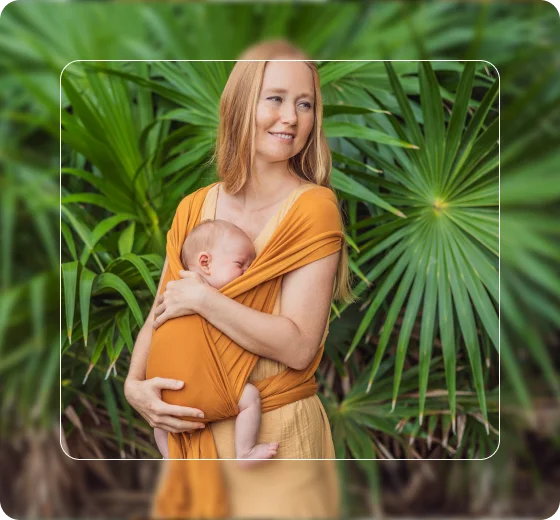
Before and During Pregnancy
The decision to grow a family brings a complex mix of emotional and physical changes. Emotional preparation is a vital part of this journey. For many, this period involves navigating heightened anxiety and making careful medication decisions. Understanding your mental health before conception can provide a strong foundation for the months ahead. If you are preparing for this transition, you can learn more about managing these early stages in our guides on emotional preparation and anxiety.
Pregnancy Mental Health
Pregnancy is a time of profound physical transformation, but the psychological shifts are equally significant. Pregnancy mental health is a critical area of focus in reproductive psychiatry. Identity shifts, sudden waves of depression, and intense anxiety are common but rarely discussed openly. Your body is navigating an entirely new hormonal landscape, and your mind is processing what this means for your future. You can read more about navigating these complex changes in our dedicated resource on pregnancy mental health.
Postpartum Period
The days, weeks, and months following childbirth represent one of the steepest hormonal drops a human being can experience. The postpartum period is frequently associated with postpartum mental health challenges, including deep depression, overwhelming anxiety, and a sudden, sometimes disorienting shift in personal identity. Coordinated support is essential during this vulnerable time. We discuss the realities of postpartum depression and anxiety extensively in our series on postpartum recovery.
Menstrual Cycle and PMDD
For some, mental health challenges are not tied to a single life event, but to a monthly rhythm. Cyclical mood changes can range from mild irritation to severe, debilitating distress. PMDD symptoms, or Premenstrual Dysphoric Disorder, represent a severe biological sensitivity to normal hormonal fluctuations. This can cause extreme anxiety, depression, and mood volatility in the days leading up to menstruation. Understanding this cycle is crucial, as explored in our articles on severe PMS and cyclical mood changes.
Perimenopause and Midlife
The transition into menopause is a gradual process that can take years. Perimenopause mental health is an area that is often misunderstood or dismissed. As hormone levels begin to fluctuate unpredictably, many experience severe anxiety hormonal causes, profound brain fog, and intense mood volatility. This stage requires careful attention and targeted support to navigate the complex intersection of aging and hormonal change. You can find more detailed information in our guides on midlife mental health.
When Mental Health Symptoms Follow Patterns - Not Just Situations
We are often taught to link our emotional state to our environment. If we are stressed at work, we feel anxious. If we experience a loss, we feel sad. But what happens when your symptoms do not follow a situational logic?
In many cases, mental health symptoms are tied to timing. You might notice that your mood plummets at the exact same point every month. You might experience a resurgence of anxiety that mirrors the anxiety you felt during a previous hormonal transition.
These are hormonal mood patterns. When your symptoms repeat across cycles or emerge during specific life stages, they are giving you important information. Cycle based anxiety and cyclical depression are often missed in traditional care because the focus remains on the immediate trigger rather than the underlying biological rhythm.
Why Traditional Mental Health Care Can Miss This
Traditional mental health care is incredibly valuable, but it often operates within a specific framework. This framework is typically symptom-focused. If you present with anxiety, the treatment is designed to reduce the anxiety.
This approach can be effective, but it often leaves the hormonal context completely unexplored. When care is fragmented, meaning your therapist, your primary care doctor, and your gynecologist are not communicating, the patterns in your mental health are easily overlooked.
This is why therapy doesn’t fully work for everyone. If you are trying to talk your way out of a biological hormone shift, you will likely feel frustrated and stuck. A lack of integration between providers means that you are left holding the pieces of your own medical puzzle.
How Reproductive Psychiatry Looks at Mental Health Differently
Integrative psychiatry fundamentally shifts the lens through which we view your wellbeing. A hormone mental health specialist does not just treat the symptom in front of them. We look at the entire system.
Our approach is built on pattern recognition. We take the time to map your mental health history alongside your hormonal history. This systems thinking allows us to see connections that a fragmented approach misses.
We provide integrated care. This means your therapy, your psychiatric care, and your lifestyle support are all moving in the same direction. By understanding the full context of your life, we can offer a more precise, individualized path forward. You can read a deeper exploration of our philosophy in our guide to the integrative psychiatry approach.

When It Might Be Time to See a Reproductive Psychiatrist
Deciding to seek specialized care is a deeply personal choice. If you have been navigating the mental healthcare system and still feel like something is missing, it may be time to consult a hormone mental health specialist.
You feel different during hormonal transitions
If you notice that your emotional baseline shifts significantly during your menstrual cycle, pregnancy, the postpartum period, or perimenopause, specialized care can offer clarity.
Your symptoms follow patterns over time
If your anxiety or depression arrives on a predictable schedule, or if you notice repeating cycles of emotional distress, these patterns require professional evaluation.
You’ve tried treatment but something still feels incomplete
Many of the individuals we work with have tried traditional therapy or standard psychiatric medication. If you have put in the work but still feel that a core piece of your experience is unaddressed, a reproductive psychiatrist can offer a new perspective.
You want a more complete understanding of what’s happening
You do not need to be in crisis to seek this kind of care. If you simply want to understand how your biology impacts your mind, and you want to make informed, highly individualized decisions about your health, an integrative approach can provide that foundation.
What Working With a Reproductive Psychiatry Team Looks Like
Reproductive psychiatry treatment at Mind Body Seven is not a rushed process. It is a collaborative, ongoing relationship. We do not believe in a one-size-fits-all solution, nor do we believe that a single appointment can uncover the complexity of your mental health.
Integrative mental health care involves continuous evaluation. As your life changes, as your hormones shift, and as your needs evolve, your care evolves with you.
We bring together different modalities of healing. This might involve deeply context-driven therapy, careful and targeted psychiatric medication management, and comprehensive lifestyle integration. We look at your sleep, your nutrition, your stress load, and your hormonal health as equal pillars of your overall wellbeing.


Meet Dr. Lina Villegas, MD
Board-Certified Psychiatrist | Reproductive & Perinatal Mental Health | Integrative Psychiatry
Dr. Lina Villegas is a board-certified psychiatrist with over 15 years of clinical experience in reproductive and perinatal psychiatry and community mental health in New York City. Her clinical work focuses on maternal and reproductive mental health, trauma-related conditions, mood and anxiety disorders in adults, and supporting individuals through major life transitions, including pregnancy, postpartum, matrescence, perimenopause, and other periods of change.
You’re Not “Overreacting” - There’s Context to What You’re Feeling
It is incredibly common to question your own reality when your mood changes without warning. Society often dismisses hormonal mood changes validation, leaving many to wonder if they are simply overreacting to the normal stresses of life.
We want to be very clear. Your experience is valid. There are tangible, biological reasons for what you are feeling. The connection between mental health hormonal changes is real, and it is powerful.
Your symptoms have patterns. Your emotional shifts have context. What you are experiencing is not random, and it is not imagined. Gaining a complete understanding of how your body and your mind interact changes everything. It removes the guilt, it provides clarity, and it opens the door to truly effective care.

Frequently Asked Questions
What does a reproductive psychiatrist treat?
A reproductive psychiatrist specializes in diagnosing and treating mental health conditions that arise or worsen during times of hormonal fluctuation. This includes premenstrual dysphoric disorder, psychiatric conditions during pregnancy, postpartum depression and anxiety, and mood changes associated with perimenopause.
How do hormones affect mental health?
Hormones act as chemical messengers that interact directly with the brain. Fluctuations in hormones like estrogen, progesterone, and testosterone can alter the production and regulation of key neurotransmitters, which directly impacts mood, energy levels, and anxiety.
Is reproductive psychiatry only for pregnancy?
No. While pregnancy and the postpartum period are significant areas of focus, reproductive psychiatry covers the entire reproductive lifespan. This includes the onset of menstruation, ongoing cyclical mood changes, fertility challenges, and the transition through perimenopause and menopause.
Can hormones cause anxiety or depression?
Yes. Rapid shifts in hormone levels can trigger or exacerbate symptoms of both depression hormonal causes and anxiety. For individuals with a biological sensitivity to these shifts, the resulting mental health symptoms can be severe and require specialized treatment.
When should I seek help for hormone-related mental health?
You should consider seeking help if you notice that your mental health symptoms consistently align with hormonal events, if traditional mental health treatments have not been fully effective, or if your symptoms are interfering with your ability to function, connect with others, or enjoy your daily life.