
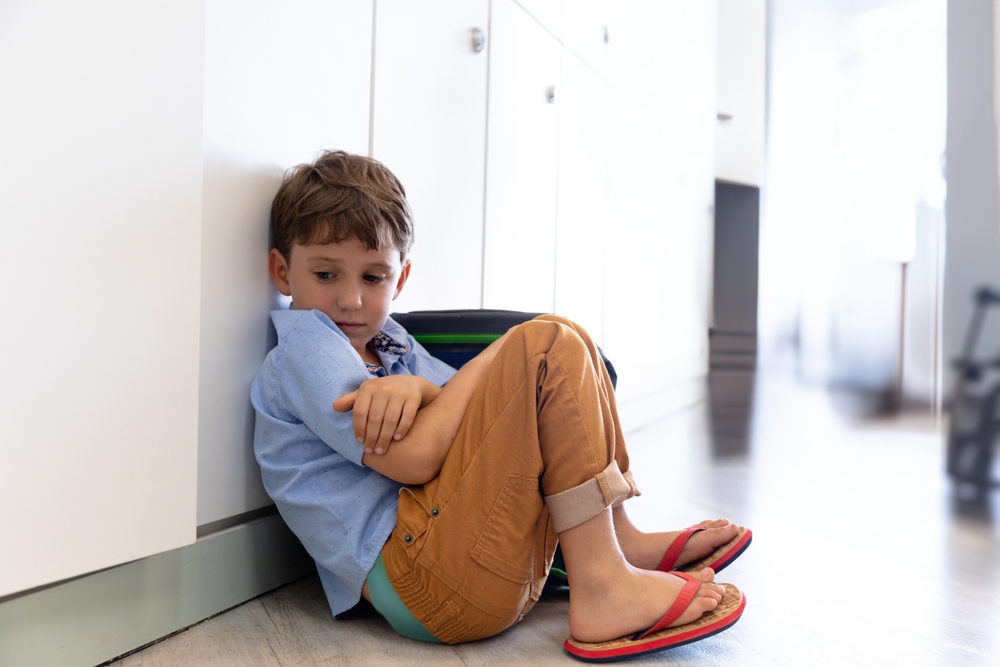
Mornings in your household have shifted from routine preparations to profound distress. You wake up wondering if today will be a good day or if you will face another grueling battle just to get your child out the door. When a child refuses to go to school, the immediate assumption is often that they are being stubborn, oppositional, or simply trying to get out of doing their work.
As a parent, witnessing this daily distress is exhausting and deeply concerning. You might feel a mix of frustration, fear for their academic future, and helplessness when logic and encouragement fail to move them. But beneath the crying, the physical complaints, and the refusal to leave their bedroom, there is almost always a complex emotional experience occurring.
School avoidance is rarely about defiance. It is a deeply rooted psychological response to distress. By understanding the clinical and emotional realities of school anxiety, you can shift from engaging in daily power struggles to offering the precise support your child needs to feel safe again.
When Getting to School Becomes a Daily Struggle
The transition from the safety of home to the demands of the classroom is one of the most significant psychological leaps a child makes each day. When this transition breaks down, it affects the entire family system.
Morning resistance, escalating conflict
The signs often start small. A child might linger in bed, refuse to get dressed, or become unusually irritable over minor details like the seam of their socks or the type of cereal they are offered. Over time, this resistance escalates into intense emotional outbursts, tears, or complete shutdown. The morning routine becomes a site of intense conflict, leaving both you and your child emotionally depleted before the day has even truly begun.
Physical complaints right before school
It is incredibly common for children to experience sudden, intense physical symptoms just as it is time to leave the house. They may report feeling nauseous, complain of severe headaches, or have stomachaches that seem to materialize out of nowhere. These complaints are heavily tied to the body’s physiological response to stress. The nervous system is activating a fight-or-flight response, manifesting real, uncomfortable physical sensations.
It doesn’t feel like simple defiance
You likely know your child well enough to sense that this resistance has a different texture than typical misbehavior. When a child refuses to clean their room, they might argue or roll their eyes. When a child is experiencing school avoidance, the refusal is laced with genuine panic, desperation, or a hollow kind of withdrawal. They are not trying to control you; they are trying to survive a situation that feels emotionally intolerable.
What School Avoidance Actually Means
To help a child struggling with school attendance, we must first change how we define the problem. The behavior you see is just the surface layer of a much deeper internal conflict.
Not just “not wanting to go”
Every child occasionally wishes they could stay home and watch television or sleep in. School avoidance is entirely different. It is characterized by an intense, overwhelming inability to cope with the prospect of attending school. The child might actually want to be able to go—they might feel deep shame about their inability to attend—but their anxiety overrides their rational intentions.
Avoidance as a response to distress
In clinical terms, avoidance is a highly effective, albeit temporary, coping mechanism for anxiety. When a child encounters something that triggers severe distress, their brain signals them to escape the threat. Staying home immediately relieves the panic, reinforcing the brain’s belief that avoiding school kept them safe. This creates a powerful cycle where the avoidance itself feeds future anxiety. Exploring child and adolescent psychiatry support can help interrupt this deeply ingrained neurological loop.
Why forcing attendance alone doesn’t resolve it
Simply physically forcing a highly distressed child into a school building does not address the root cause. While attendance is the ultimate goal, using pressure, threats, or physical force often traumatizes the child further and increases their baseline anxiety. It teaches them that their distress is not heard or validated, which can fracture their trust in the adults trying to help them. Understanding the core drivers of their anxiety affecting school and daily life is the only sustainable path forward.
Common Reasons Kids Avoid School
When we look underneath the behavior, we almost always find a specific stressor—or a combination of stressors—that the child lacks the developmental tools to navigate.
Anxiety About Separation or Safety
Especially in younger children, school refusal anxiety is often tethered to separation. The child may harbor deep, unspoken fears that something terrible will happen to their caregivers while they are apart. They might worry about the safety of their home environment or fear that they will be abandoned. For these children, school is not the threat; the separation from their primary attachment figure is the threat.
Social Anxiety or Peer Stress
As children grow into adolescence, the social landscape of school becomes a minefield. Fear of judgment, social exclusion, or saying the wrong thing can make the school environment feel deeply unsafe. A child might be avoiding the cafeteria, the locker room, or the unstructured time between classes where social hierarchies are enforced. The pressure to fit in and the fear of public humiliation can cause intense paralysis.
Academic Pressure or Feeling Behind
Some children internalize academic expectations to a degree that perfectionism becomes paralyzing. If they feel they cannot succeed, or if they are struggling with an undiagnosed learning difference, the classroom becomes a site of daily failure and shame. Rather than facing the humiliation of not knowing an answer or failing a test, the child will avoid the environment entirely.
Bullying or Negative School Experiences
A child experiencing active bullying, harassment, or a fractured relationship with a teacher has a highly logical reason to avoid school. They are protecting themselves from a hostile environment. Often, children will not explicitly tell their parents about bullying due to shame or the fear that adult intervention will make the situation worse.
Depression or Loss of Motivation
Sometimes, school avoidance is a symptom of clinical depression. The child may simply lack the physical and emotional energy required to get out of bed, socialize, and focus on academic tasks. They might express a pervasive sense of hopelessness, a lack of interest in previously enjoyed activities, and a general emotional flatness. Recognizing these signs is critical, and seeking interventions for depression can be a necessary step in restoring their ability to function.
Physical Symptoms That Show Up with School Anxiety
The mind and the body are not separate entities. When a child’s brain perceives school as a threat, their body reacts exactly as it would to a physical danger.
Stomachaches, headaches, nausea
Parents search frequently for information about a “child stomach aches before school anxiety.” This is because the gut is highly sensitive to emotional distress. Stress hormones like cortisol and adrenaline flood the child’s system, slowing down digestion and causing genuine pain, nausea, and tension headaches. These physical symptoms are not faked; the child is truly in pain.
Sudden illness before school
You may notice that your child appears genuinely pale, clammy, or feverish on Sunday night or Monday morning. The anticipation of the school week triggers an acute stress response that mimics physical illness.
Symptoms that ease when staying home
One of the most confusing aspects for parents is how rapidly the physical symptoms disappear once the decision is made that the child can stay home. By 10:00 AM, the child might be eating normally and playing happily. This does not mean they manipulated you. It means the perceived threat (school) was removed, allowing their nervous system to return to a calm, regulated state.
Why School Avoidance Is Often Misinterpreted
Because the symptoms of school avoidance look highly behavioral, they are frequently misunderstood by well-meaning adults, leading to ineffective interventions.
Labeled as laziness or defiance
When a child refuses to go to school, society often labels them as lazy, oppositional, or truant. This framework assumes the child has the capacity to attend but is simply choosing not to out of spite. This judgment isolates the child and deeply frustrates the parent, who feels they are failing to discipline their child properly.
Power struggles vs underlying distress
When parents view the avoidance as defiance, the natural response is to assert authority. This results in shouting matches, the taking away of privileges, and severe consequences. However, you cannot punish the anxiety out of a child. Power struggles only increase the child’s distress, confirming their internal belief that the world is a stressful and unsupportive place.
Why punishment often makes it worse
Consequences for non-attendance generally fail because the child’s fear of school is far greater than their fear of losing their electronics or being grounded. Punishing a child for having a panic response drives the anxiety deeper and fractures the parent-child connection. We must shift our perspective to view their actions through the lens of when behavior is communication.
When It Becomes a Pattern (Not a Phase)
Every child has a rough morning now and then. But school avoidance requires clinical attention when it shifts from a transient reaction to an entrenched pattern.
Increasing frequency
What begins as missing one Monday a month slowly creeps into missing two days a week, until the child is absent more often than they are present. The more school a child misses, the harder it becomes to return, as they now have to face academic makeup work and questions from peers about where they have been.
Longer recovery times
You may notice that the child requires the entire weekend just to recover from the stress of a partial school week. Their capacity to bounce back from minor stressors diminishes, and they exist in a state of chronic emotional depletion.
Avoidance spreading beyond school
Left unaddressed, the anxiety driving school avoidance often generalizes to other areas of life. The child may begin refusing to attend extracurricular activities, family gatherings, or even trips to the grocery store. The “safe zone” of their bedroom becomes increasingly rigid.
What Children Are Often Experiencing Internally
To effectively support your child, it is helpful to pause and consider the internal landscape they are navigating when they refuse to leave the house.
Overwhelm, fear, or shutdown
Internally, the child is often experiencing a catastrophic level of overwhelm. Their thoughts are racing with worst-case scenarios, or conversely, their brain has completely shut down in a state of dissociation to protect them from the emotional pain.
Feeling stuck between expectations and capacity
Children generally want to please their parents and succeed. When they suffer from school refusal anxiety, they are painfully aware of the gap between what is expected of them and what they feel capable of doing. This gap breeds intense self-loathing and shame.
Not knowing how to explain what’s wrong
If you ask a child, “Why does my child not want to go to school?”, they will likely say, “I don’t know,” or give a seemingly trivial reason. Children rarely possess the emotional vocabulary to articulate complex psychological distress. They cannot say, “I am experiencing acute social anxiety due to peer evaluation.” They can only show you through their resistance.
How to Respond Without Escalating the Situation
Changing your response in the heat of the moment can help de-escalate the morning crisis and begin the process of untangling the avoidance.
Reducing pressure while maintaining structure
Lower the emotional temperature in the home. Stop arguing and negotiating. If it is clear the child cannot attend school that day, remove the pressure immediately, but maintain a predictable, low-stimulation structure at home. Staying home should not be a highly rewarding day of unlimited screen time, but rather a quiet day focused on emotional regulation.
Understanding before correcting
Before you can fix the attendance issue, you must validate the child’s emotional experience. Statements like, “I can see how terrified your body is feeling right now, and I am here with you,” do not reinforce the avoidance; they regulate the nervous system. A regulated child is much more capable of problem-solving than a panicked one.
Avoiding daily battles that reinforce avoidance
Engaging in a screaming match every morning only cements the morning routine as a time of trauma. If the current strategy is resulting in daily meltdowns, it is time to step back and seek clinical guidance. Often, family therapy for school-related stress can help parents and children develop new patterns of communication that break the cycle of morning conflict.
When to Consider Professional Support
School avoidance is highly treatable, but it is rarely something a family can resolve independently once it has become entrenched.
Ongoing refusal or distress
If your child has missed consecutive days of school, or if they are attending but experiencing daily, intense distress to get there, professional intervention is necessary. You do not have to wait until they have failed a semester to ask for help.
Impact on learning and social development
Chronic avoidance severely impacts a child’s academic trajectory and isolates them from the critical social development that happens in peer groups. The longer the avoidance lasts, the more difficult the re-entry process becomes.
When home strategies stop working
You may have tried adjusting their sleep schedule, talking to the school counselor, and implementing reward systems, only to see the anxiety persist. This is the moment to connect with individual therapy support for children. A clinician can help uncover the specific drivers of the anxiety and develop an exposure-based plan to help the child slowly tolerate the school environment again. For comprehensive evaluation, child and adolescent psychiatry support can offer both therapeutic and, if appropriate, medical interventions.
Addressing the Cause Changes the Outcome
Navigating a child’s refusal to attend school is one of the most challenging experiences a parent can face. It is easy to feel judged by the school system and exhausted by the daily emotional toll. But it is vital to remember that your child is not broken, and they are not trying to make your life difficult.
Healing school avoidance is not about forcing attendance at any cost. It is about understanding what is underneath the behavior and building the child’s capacity to tolerate distress. When we treat the underlying anxiety, depression, or learning challenge, the behavior of school refusal naturally begins to dissipate.
Early intervention makes a profound difference in a child’s recovery. You do not have to carry this burden alone, and neither does your child. If you are struggling with school avoidance in your home, reach out to our team for child and adolescent psychiatry support, or visit our contact page to schedule an initial consultation. Together, we can help your child feel safe enough to step back into their life.
