
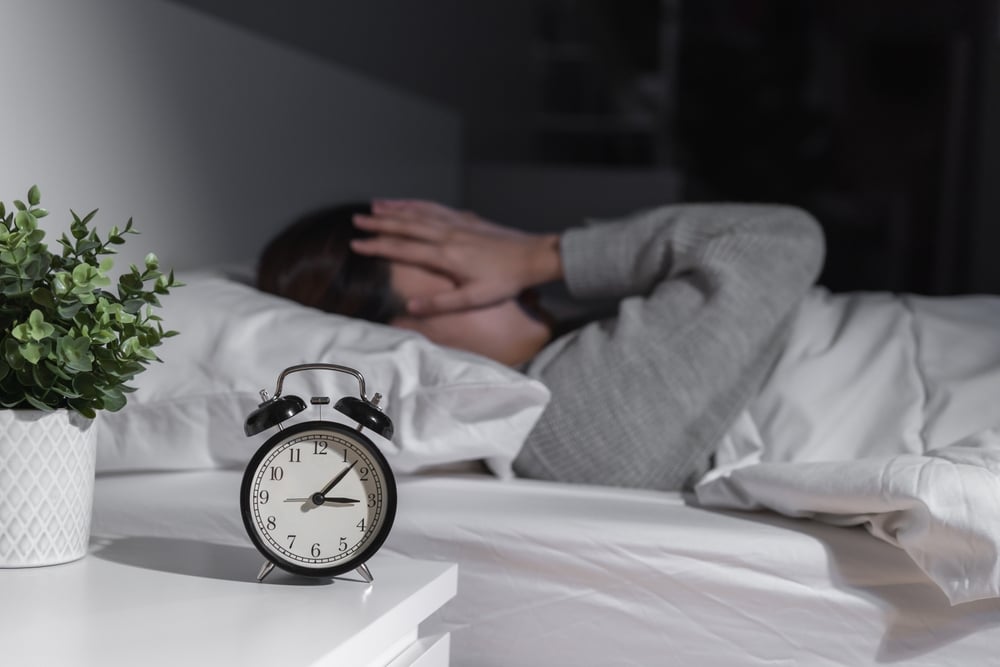
You have been exhausted all day. Your eyes feel heavy, your energy is completely drained, and all you want to do is collapse into bed. But the moment your head hits the pillow, something shifts. Your brain turns on, your heart rate seems to tick upward, and sleep feels miles away.
Lying in the dark, you might wonder, “Why am I tired but can’t sleep?”
This is one of the most frustrating experiences a person can go through. You are doing everything right by getting into bed early, yet your body refuses to cooperate. The truth is, feeling exhausted and being able to fall asleep are two very different biological processes. Sleep is not just the result of running out of energy. It requires a specific state of physiological and psychological safety.
If you are dealing with this exhausting cycle, you do not just need another list of basic sleep hygiene tips. You need to understand what is happening inside your nervous system. By looking at how stress, anxiety, and mental activation override your natural sleep drive, you can begin to make sense of this confusing pattern.
Why this feels so frustrating (and more common than you think)
Exhaustion without sleep feels deeply contradictory. It goes against everything we assume about how the human body works. When you are hungry, you eat and feel full. When you are thirsty, you drink and feel hydrated. Logically, when you are tired, you should simply close your eyes and fall asleep.
Because people assume sleep should happen automatically, failing to fall asleep feels like a personal failure. You might lie there calculating how many hours of rest you will get if you fall asleep right now. But the more you try to force it, the harder it becomes. The sheer effort of trying to sleep generates a low-grade panic, pushing rest further out of reach.
If this happens occasionally, it is a nuisance. When it happens consistently, it can quickly develop into chronic insomnia. You are far from alone in this experience. Millions of people struggle with a body that is drained of energy and a brain that refuses to power down. Reaching out for professional support can be a vital next step when the frustration becomes too heavy to carry alone.
The difference between being tired and being able to sleep
To understand why your brain won’t shut off at night, it helps to separate the concepts of fatigue and sleepiness. They often overlap, but they are not the same thing.
Physical fatigue vs mental activation
Physical fatigue is the depletion of energy. It happens after a long day of work, an intense workout, or simply managing the demands of daily life. Your muscles ache, your eyes burn, and you lack the stamina to keep going.
Sleepiness, on the other hand, is the biological signaling that your brain is ready to transition into an unconscious state of rest. You can have high physical fatigue but high mental activation. Your body is done for the day, but your mind is still processing, planning, and worrying.
Why your body and brain can be out of sync
Your body and brain fall out of sync when different internal systems send conflicting messages. Your sleep drive—the biological pressure to sleep that builds up the longer you are awake—might be very high. At the same time, your arousal system—the network responsible for keeping you alert to danger—might also be fully activated.
When your arousal system overrides your sleep drive, you end up feeling completely exhausted but unable to fall asleep.
Sleep requires more than just exhaustion
Falling asleep is an act of vulnerability. From an evolutionary perspective, unconsciousness is dangerous. Therefore, sleep requires more than just exhaustion; it requires a deep, physiological sense of safety. If your brain detects a threat—even if that threat is just a stressful email or a looming deadline—it will keep you awake to protect you.
The role of your nervous system in sleep
Your nervous system is the control center for your entire body. When it comes to sleep problems, anxiety, and feeling tired, the nervous system is almost always the main culprit.
“Tired but wired” explained
The phrase “tired but wired” perfectly captures this state of nervous system dysregulation. Your physical energy stores are empty (tired), but your nervous system is pumping out adrenaline and cortisol (wired). You might notice your heart beating a little harder, a tightness in your chest, or a mind that races from one thought to the next. The “tired but wired at night” meaning boils down to a nervous system stuck in the “on” position.
Fight-or-flight vs rest-and-digest
Your autonomic nervous system has two main branches. The sympathetic nervous system drives the “fight-or-flight” response, preparing you to deal with stress. The parasympathetic nervous system manages the “rest-and-digest” functions, allowing your body to relax, recover, and sleep.
You cannot enter a state of deep sleep while the sympathetic nervous system is highly active. If you are stressed, your body is biologically primed to fight a threat, not to rest.
Why your body doesn’t feel safe enough to sleep
Modern stressors do not look like predators in the wild, but your body reacts to them in the exact same way. Financial worries, relationship conflicts, and overwhelming workloads signal to your brain that you are not safe. Until that perceived threat is resolved or managed, your nervous system will resist the transition into sleep. Addressing these underlying triggers often requires looking closely at anxiety and psychiatry to help regulate your biological responses.
Common reasons you can’t sleep even when exhausted
While the underlying mechanism is usually a heightened nervous system, the specific triggers can vary from person to person. Here are several reasons why you might experience sleep issues even when exhausted.
Racing thoughts and mental overactivity
One of the most common complaints is a brain that suddenly wakes up the moment the lights go out. Without the distractions of the day, your mind finally has the space to process unresolved thoughts. This leads to racing thoughts at night, where you mentally rehearse conversations, plan for tomorrow, or dwell on past mistakes.
Chronic stress and overstimulation
Living in a constant state of stress keeps your baseline arousal levels abnormally high. If you spend your entire day rushing from one task to another, drinking excess caffeine, and putting out fires, your nervous system cannot instantly shift gears just because you put on pajamas.
Irregular sleep patterns
Your circadian rhythm thrives on consistency. If you go to bed at wildly different times, take long naps during the day, or sleep in on weekends to compensate for lost rest, you confuse your body’s internal clock. You might feel exhausted, but your brain does not know that it is supposed to be sleeping.
Anxiety that shows up at night
For many people, anxiety is easily masked during the day by work, socializing, and chores. At night, the quiet room becomes a breeding ground for anxious thoughts. If you find yourself asking, “Why does anxiety keep me awake at night?” the answer lies in the absence of daytime distractions. The silence amplifies your internal worries.
Over-reliance on screens or stimulation
Scrolling through your phone, watching intense television shows, or reading the news in bed provides a continuous stream of dopamine and blue light. Blue light suppresses melatonin, the hormone responsible for signaling sleep. Meanwhile, the engaging content keeps your brain actively processing information, directly combating your body’s need for rest.
Why trying harder to sleep often makes it worse
When you are desperately tired, you naturally try hard to fall asleep. Unfortunately, sleep is one of the few things in life where effort directly prevents success.
Performance pressure around sleep
Treating sleep as a task to be accomplished creates performance anxiety. You start monitoring yourself: Am I falling asleep yet? How about now? This constant self-evaluation keeps your brain highly alert. You cannot actively “do” sleep; you have to allow it to happen.
Increased frustration and alertness
Every minute that passes without sleep increases your frustration. Frustration is an activating emotion. It triggers the release of stress hormones, which further elevates your heart rate and body temperature. The angrier you get about being awake, the more awake you become.
The cycle of “trying to sleep”
This creates a vicious cycle. You feel tired but can’t sleep. You try harder, which makes you frustrated. The frustration triggers the fight-or-flight response, making you wired. You are now more awake than you were an hour ago, leading to even more effort and even more frustration. Breaking this cycle requires abandoning the effort to force sleep entirely.
How anxiety and insomnia feed each other
Anxiety and sleep issues share a bi-directional relationship. Each one heavily influences and exacerbates the other, creating a tangled web that can be difficult to untangle.
Worry about sleep affecting sleep
Eventually, the inability to sleep becomes the primary source of anxiety. You start worrying about how terrible you will feel the next day. You stress about your performance at work, your mood, and your health. This intense worry about sleep is enough to trigger the nervous system arousal that prevents sleep from occurring.
Nighttime as a trigger for anxious thinking
After a few nights of tossing and turning, your brain starts to associate your bed with stress rather than rest. As evening approaches, you might feel a knot forming in your stomach. The bedroom itself becomes a conditioned trigger for anxious thinking, making it nearly impossible to relax in that environment.
Anticipation of another bad night
The anticipation of a bad night often guarantees a bad night. You get into bed already expecting to fail. This anticipatory anxiety keeps your sympathetic nervous system firmly in the driver’s seat. Exploring the anxiety and insomnia connection is crucial for anyone trapped in this looping pattern.
When this pattern starts becoming insomnia
Everyone has the occasional bad night. But when the problem persists, it crosses the line from a transient issue into a chronic condition.
Difficulty falling asleep multiple nights a week
If you find yourself lying awake for hours, three or more nights a week, you are likely dealing with clinical insomnia. It is no longer just a reaction to a specific stressful day; it has become a habitual pattern that your brain has learned and automated.
Daytime fatigue and brain fog
The consequences of this pattern spill over into your waking hours. You might experience severe daytime fatigue, memory issues, difficulty concentrating, and mood swings. You drag yourself through the day, only to become “tired but wired” all over again at night.
Ongoing disruption of your sleep cycle
Over time, this ongoing disruption fundamentally alters your sleep architecture. Your body forgets how to transition smoothly through the stages of light sleep, deep sleep, and REM. Recognizing when insomnia becomes chronic is the first step toward seeking appropriate, structured care.
What your sleep difficulty might actually be signaling
Rather than viewing your inability to sleep as a broken mechanism, it is often more helpful to view it as a messenger. Your body is trying to tell you something about your current state of existence.
Ongoing stress or anxiety rarely stays neatly contained in your waking hours; it bleeds into your nights. A lack of sleep is often a glaring indicator of emotional or cognitive overload. If you are carrying unprocessed trauma, suppressing heavy emotions, or simply trying to survive in an unsustainable environment, your nervous system dysregulation will show up at midnight.
Understanding the link between sleep issues and mental health allows you to stop fighting the symptom (wakefulness) and start addressing the root cause (nervous system distress).
When it’s time to stop trying to fix it alone
There is a thriving market of supplements, heavy blankets, and sleep hygiene advice aimed at fixing sleep problems. While these tools can be helpful, they often fail to address the core nervous system dysregulation.
The pattern has been ongoing for weeks or months
If you have been dealing with this for weeks or months, the pattern is likely entrenched. Simple behavioral tweaks are rarely enough to reset a deeply dysregulated nervous system.
You feel anxious about sleep itself
When your primary anxiety is centered around the act of sleeping, you are caught in a self-fulfilling prophecy. This specific type of sleep anxiety requires targeted psychological intervention to dismantle the fear and pressure you have built around your bed.
It’s affecting your daily functioning
If your inability to fall asleep even when you are tired is impacting your work, your relationships, or your overall will to engage with life, it is time to seek professional help. You do not have to accept exhaustion as your permanent baseline.
Our team specializes in a comprehensive therapy and psychiatry approach to help you break free from chronic sleep struggles. We focus on the underlying drivers of your insomnia, not just surface-level symptoms. Visit our homepage to book a consultation and take the first step toward actual, restorative rest.
How Mind Body Seven approaches sleep issues differently
At Mind Body Seven, we know that telling an exhausted, anxious person to “just practice good sleep hygiene” is rarely effective. You have already tried taking warm baths and turning off your screens.
Our approach goes deeper by understanding the underlying patterns of your nervous system. We do not just treat the wakefulness; we look at the chronic stress, the mental overload, and the physiological arousal keeping you awake. By utilizing integrated care that combines targeted therapy with expert psychiatry, we help your body remember how to feel safe enough to rest. You can explore our philosophy and learn more about our team on our homepage.
The takeaway most people need to hear
If you take anything away from this, let it be this: Being tired isn’t enough to fall asleep.
Sleep is deeply tied to how your nervous system is functioning. If you are stuck in a state of hyper-arousal, your brain will prioritize safety over rest every single time. Stop blaming yourself for failing to sleep. Understanding this pattern—and showing yourself compassion as you work to regulate your nervous system—is infinitely more helpful than trying to force your eyes shut. Rest is possible, but it begins with teaching your body that it is finally safe to let go.

