
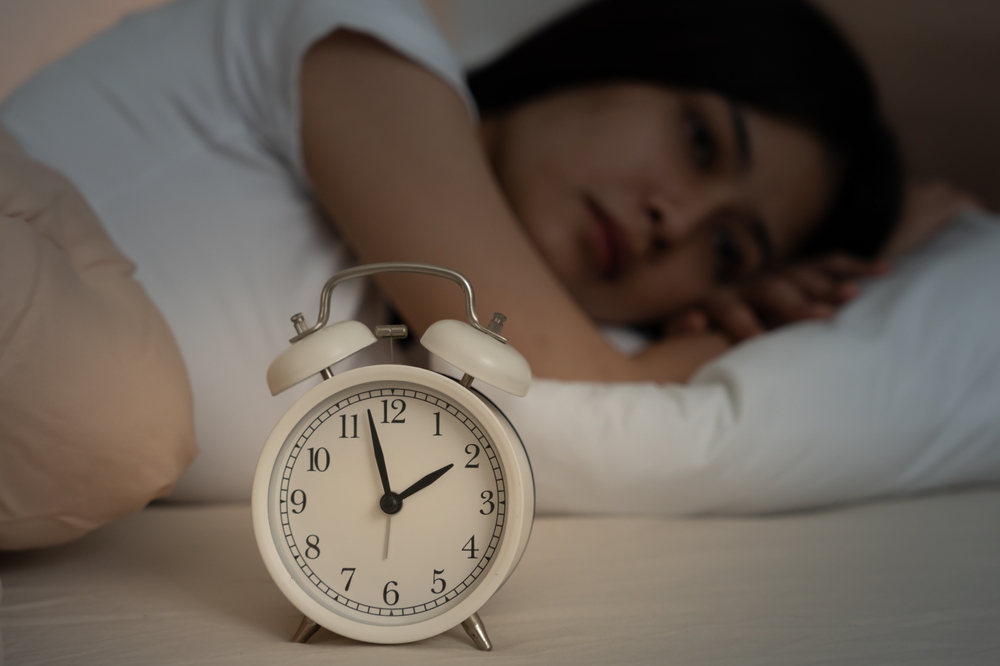
You feel it in your bones all day. The heavy exhaustion behind your eyes, the sluggishness in your limbs, the deep craving to finally just lie down and rest. But the moment your head hits the pillow, something shifts. Your mind suddenly wakes up. Your thoughts start racing, your body feels strangely tense, and sleep feels entirely out of reach.
You are entirely exhausted, yet you cannot sleep.
If this sounds familiar, you are caught in the overlap between anxiety and sleep problems. When the mind and body cannot settle down despite being deeply tired, it is usually because the nervous system is staying in a state of heightened alert. Nighttime anxiety transforms your bed from a place of rest into a place of frustration. You lie in the dark, wondering why anxiety keeps you awake and when your brain will finally let you rest.
Understanding the connection between nighttime anxiety, racing thoughts, and physical restlessness is the first step toward finding relief. By looking closely at how anxiety causes insomnia and disrupts your natural sleep cycles, you can begin to shift these frustrating patterns and allow your nervous system to genuinely unwind.
Why Anxiety Feels Worse at Night
For anyone dealing with anxiety, the nighttime hours often bring a unique kind of dread. During the day, you have tasks, conversations, and routines that demand your attention. At night, those anchors disappear.
Fewer distractions, more mental space
Daylight brings a constant stream of external input. You are working, talking, commuting, and navigating the world. This busyness acts as a natural buffer against anxious thoughts. Once the sun goes down and your daily tasks are complete, that buffer vanishes. The sudden emptiness of the evening leaves a wide-open mental space. Without emails to answer or errands to run, your brain begins to fill that silence with the worries, stressors, and unresolved thoughts it ignored during the day.
Why thoughts get louder when everything is quiet
When the environment around you gets quiet, your internal monologue naturally grows louder. You might notice yourself hyper-focusing on small details from your day or worrying about upcoming events. This is a common feature of anxiety and a primary trigger for overthinking at night. The stillness of your bedroom strips away the noise that usually drowns out your internal dialogue, making every anxious thought feel incredibly urgent and impossible to ignore.
How Anxiety Interferes With Sleep
Sleep requires a transition from an active, alert state to a passive, relaxed state. Anxiety forcefully interrupts this transition. It acts like an alarm bell inside your nervous system, signaling that you need to stay awake and stay vigilant.
Racing thoughts and mental loops
One of the most common nighttime anxiety symptoms is a mind that simply will not stop. You might find your brain jumping rapidly from one topic to the next, a phenomenon often described as racing thoughts. Alternatively, you might get stuck in mental loops, replaying the same worry or hypothetical scenario over and over again. This cognitive hyperactivity blocks the brain from entering the slower brainwave patterns required for the early stages of sleep.
Physical tension and restlessness
Anxiety is never just a mental experience. It manifests heavily in the body. When you feel anxious at night, your muscles tighten in preparation for a perceived threat. You might clench your jaw, pull your shoulders toward your ears, or feel an uncomfortable restlessness in your legs. This physical tension makes it incredibly difficult to find a comfortable sleeping position, leaving you tossing and turning for hours.
The body staying in “alert mode”
Under normal circumstances, your nervous system begins to power down as you prepare for sleep. Your heart rate slows, your breathing deepens, and your core temperature drops. Anxiety causes the exact opposite reaction. It triggers the sympathetic nervous system, flooding your bloodstream with stress hormones like cortisol and adrenaline. Your body stays in “alert mode,” treating the quiet of your bedroom as an environment where you must remain awake to guard against danger.
Common Sleep Problems Caused by Anxiety
The intersection of anxiety and trouble sleeping takes several different forms. Not everyone experiences nighttime anxiety in exactly the same way. Understanding your specific sleep disruption can help you identify the best way to address it.
Trouble falling asleep even when exhausted
This is perhaps the most frustrating experience. You spend the whole day feeling fatigued, but the moment you try to sleep, you feel wired. Anxiety makes it hard to fall asleep because your brain interprets the act of letting go of consciousness as a vulnerability. Your body is physically tired, but your brain refuses to grant you permission to rest.
Waking up in the middle of the night
Sometimes, the sheer exhaustion allows you to fall asleep initially. However, a few hours later, you wake up suddenly. Waking up anxious in the middle of the night often comes with a racing heart and a sudden influx of worry. Once you are awake, the silence of the house and the darkness of the room make it incredibly difficult to soothe yourself back to sleep.
Light, restless, or non-restorative sleep
Even if you manage to stay asleep, anxiety can degrade the quality of your rest. You might experience a very light sleep, where you remain partially aware of your surroundings. You may toss and turn, have vivid or stressful dreams, and wake up feeling just as exhausted as you did the night before. This non-restorative sleep leaves you physically depleted.
Feeling tired but wired
The “tired but wired” sensation happens when your physical exhaustion collides with an overactive nervous system. Your body is begging for rest, but your brain is running at top speed. It feels like pressing the gas pedal and the brake at the exact same time. This state is a hallmark of anxiety insomnia and requires a deliberate approach to calm the nervous system before sleep can occur.
The Anxiety–Sleep Cycle
Sleep and mental health are deeply intertwined. When one suffers, the other almost always follows suit, creating a feedback loop that can be very difficult to break without intervention.
Anxiety → poor sleep → more anxiety the next day
The cycle usually begins with an anxious day that leads to an anxious night. Your racing thoughts keep you awake, resulting in a fragmented, short period of sleep. The next morning, you wake up feeling drained. Because you are exhausted, your emotional resilience is lower, making you more susceptible to stress and anxiety throughout the day. This heightened anxiety then leads right back into another night of poor sleep.
Why lack of sleep makes anxiety worse
Sleep is the time when your brain processes emotions and clears out metabolic waste. Without adequate rest, the amygdala—the part of the brain responsible for processing fear and threat—becomes highly reactive. Lack of sleep literally changes how your brain interprets the world, making neutral situations feel dangerous and minor stressors feel overwhelming.
How the cycle becomes self-reinforcing
Eventually, this pattern creates a new layer of worry: health anxiety specifically focused on your sleep. You start worrying about how your lack of sleep will ruin your next day. You become anxious about the fact that you are anxious. The bed becomes associated with stress rather than rest, and the cycle firmly reinforces itself.
Why Trying to Force Sleep Makes It Harder
When you are desperate for rest, your instinct is to try harder. You squeeze your eyes shut, force yourself to lie perfectly still, and command your brain to go to sleep. Unfortunately, sleep is one of the few things in life that becomes harder to achieve the more effort you put into it.
The pressure to fall asleep
As the minutes tick by and the clock reads 2:00 AM, then 3:00 AM, the pressure mounts. You start doing the math: “If I fall asleep right now, I can still get four hours.” This internal countdown creates immense performance anxiety. The pressure to fall asleep signals to your brain that failing to sleep is a dangerous problem, which only spikes your adrenaline further.
Frustration increasing mental activation
Lying in the dark unable to sleep is an isolating and deeply frustrating experience. You might feel angry at your own brain or resentful of the quiet house around you. Frustration is a highly activating emotion. It increases your heart rate and your breathing rate, pulling you entirely out of the relaxed state necessary for sleep.
How control attempts backfire
You cannot bully your nervous system into relaxing. Trying to forcefully control your sleep backfires because control requires vigilance, and vigilance prevents sleep. True rest requires surrender. Attempting to micromanage your breathing or aggressively block out thoughts only keeps your conscious mind highly engaged.
Nighttime Overthinking and Anticipatory Anxiety
The content of your thoughts at night plays a massive role in keeping you awake. When the lights go out, the mind often travels to the past or the future, rarely staying in the present moment.
Replaying the day or worrying about tomorrow
Your brain might decide that 1:00 AM is the perfect time to review a slightly awkward conversation you had earlier that afternoon. Alternatively, it might project into the future, creating detailed lists of everything you need to accomplish tomorrow. This anticipatory anxiety demands problem-solving energy, which keeps your brain highly active.
“Just one more thought” turning into hours
Overthinking at night rarely starts as a conscious decision to stay awake. It usually begins with a small, seemingly harmless thought. You engage with it, thinking you will just resolve this one worry before going to sleep. However, that one thought links to another, and another, until you have spent hours tangled in a web of overthinking.
How uncertainty keeps the brain engaged
Anxiety hates uncertainty. Your brain wants to resolve all unknown variables to ensure your safety. At night, your mind will often latch onto unsolvable problems or ambiguous situations from your life, trying to find a definitive answer. Because these problems cannot be solved at 2:00 AM in your bed, your brain stays engaged indefinitely, endlessly searching for a resolution that isn’t there.
Subtle Physical Symptoms That Keep You Awake
While the mental loops are obvious, the physical symptoms of nighttime anxiety can be subtle, keeping you awake without you fully realizing why.
Racing heart or shallow breathing
You might not feel actively panicked, but your body might be displaying the physiological markers of stress. A slightly elevated heart rate or shallow, chest-based breathing sends continuous signals to your brain that you are not safe. This subtle activation prevents the deep physical relaxation required for sleep.
Muscle tension or restlessness
Sometimes, anxiety hides in the body. You might feel a vague discomfort, a tightness in your chest, or an overwhelming urge to move your legs. Physical symptoms of anxiety create a sense of internal friction. Your body feels uncomfortable in its own skin, making the stillness of lying in bed feel unbearable.
Heightened awareness of body sensations
When the room is quiet, you might become hyper-aware of your own bodily functions. You might start listening to your heartbeat, focusing intensely on your breathing rhythm, or noticing every minor ache and pain. This somatic hyper-vigilance keeps your attention locked onto your body in a stressful, analytical way.
When Sleep Problems Become Something More
A few nights of bad sleep due to a stressful life event is normal. However, when anxiety and trouble sleeping become your nightly reality, it begins to take a severe toll on your overall well-being.
Ongoing insomnia patterns
When sleep problems stretch into weeks or months, the pattern transitions into chronic insomnia. Your brain learns to associate your bed with wakefulness, frustration, and anxiety. Even if your daily stress levels decrease, the learned pattern of insomnia can persist simply because your body has forgotten how to fall asleep naturally.
Daytime impact: fatigue, irritability, brain fog
The effects of nighttime anxiety do not stay in the bedroom. They bleed into your daylight hours. Chronic sleep deprivation leads to pervasive brain fog, making it difficult to concentrate or remember details. You may feel deeply irritable, emotionally fragile, and physically exhausted. This daytime fatigue further degrades your quality of life.
When it’s time to get support
If you are consistently saying “my brain won’t shut off at night,” and the resulting exhaustion is impacting your work, your relationships, or your mental health, it is time to seek professional support. You do not have to accept chronic sleep deprivation as a permanent feature of your life.
How Therapy Helps Improve Sleep and Anxiety
Breaking the cycle of anxiety and insomnia usually requires addressing both the underlying anxiety and the behavioral patterns surrounding sleep. Professional support offers structured, evidence-based ways to calm the mind and restore your rest.
CBT for breaking thought patterns at night
Cognitive Behavioral Therapy (CBT) is highly effective for both anxiety and insomnia. A therapist can help you identify the specific thought loops that keep you awake and teach you how to challenge and reframe them. CBT interventions also focus on stimulus control, helping you rebuild the psychological association between your bed and restful sleep rather than stress and wakefulness.
ACT and letting go of the need to control sleep
Acceptance and Commitment Therapy (ACT) takes a slightly different approach. Instead of fighting the anxious thoughts, ACT teaches you how to change your relationship with them. By learning to accept the presence of anxiety without actively struggling against it, you remove the friction and frustration that keeps you awake. Letting go of the desperate need to control your sleep ironically creates the perfect conditions for sleep to naturally occur.
When psychiatry may help regulate sleep and anxiety
In some cases, the nervous system is so dysregulated that therapy alone takes too long to provide the immediate relief needed to function. In these instances, working with a psychiatrist can be incredibly beneficial. Medication can be used as a short-term tool to calm the physical symptoms of anxiety, break the insomnia cycle, and give your nervous system a chance to reset while you do the deeper work in therapy.
You Don’t Have to Keep Fighting Your Mind at Night
Lying awake in the dark, fighting a battle against your own mind, is an exhausting way to live. When anxiety and sleep issues merge, they create a heavy burden that affects every hour of your day. But this cycle, no matter how deeply ingrained it feels right now, can be broken.
You can learn to quiet the mental noise. You can train your nervous system to feel safe enough to rest. If you are tired of feeling wired but exhausted, and you want to explore therapy for anxiety, we are here to help. Reach out to our team or explore our Homepage to learn more about how our integrative approach can help you finally find the restful, restorative sleep you deserve.
