
Skip to content

Patient Portal 

|

Text Us: 929-600-7724
MIND BODY Psychiatry Logo
  • About Us
    our team
    Our Team
    refer
    Refer a Patient
    career
    Careers
    fees
    Fees & Insurance
    drlewis
    DrLewis Functional Psychiatry Practice
  • Services
    hypnotherapy
    Hypnotherapy
    ketamine
    Ketamine Psychotherapy
    med management
    Medication Management
    nutrition
    Nutrition & Supplements
    psychiatric
    Psychiatric Evaluation & Treatment
    psychotherapy
    Psychotherapy
    service row1 (1)
    Child & Adolescent Psychiatry / Therapy
    service row1 (2)
    Adult Psychiatry and Therapy
    service row1 (3)
    Women’s Mental Health
    service row1 (4)
    LGBTQ+ Affirming Care
    service row1 (5)
    Executive & Professional Mental Health
    service row1 (6)
    Telehealth Psychiatry
    service row1 (7)
    Online Therapy
    service row1 (8)
    In-Person Psychiatry
    service row1 (9)
    Out-of-Network Psychiatrist
    Child Adolescent Psychiatry Therapy
    Couple’s Therapy
    Family Therapy
    Family Therapy
    Play Therapy
    Play Therapy
    Individual Therapy
    Individual Therapy
    Evidence Based Therapies
    Evidence-Based Therapies
    Integrative Psychotherapy
    Integrative Psychotherapy
    Integrative Mind Body Approaches
    Integrative & Mind-Body Approaches
    Mindfulness Based Therapy
    Mindfulness-Based Therapy
    Depression
    Depression & Treatment-Resistant Depression
    anxiery
    Anxiety / Health Anxiety / Panic Disorder
    adhd adults child
    ADHD (Adult & Child)
    ptsd menu
    PTSD & Trauma
    ocd menu
    OCD Treatment
    bipolar (1)
    Bipolar Disorder Treatment
    insomia
    Insomnia Treatment
    burnout (1)
    Burnout & Chronic Stress Treatment
    mental health support
    Grief Treatment
    post partum (1)
    Postpartum & Perinatal Mental Health Treatment
    therapy approaches (2)
    Therapy Approaches & Modalities
    cbt (1)
    Cognitive Behavioral Therapy (CBT)
    dbt (2)
    Dialectical Behavior Therapy (DBT)
    act (4)
    Acceptance and Commitment Therapy (ACT)
    psychodynamic (1)
    Psychodynamic Therapy
    emdr (1)
    EMDR Therapy
    last card (1)
    Internal Family Systems (IFS) Therapy
    trauma therapy (2)
    Exposure and Response Prevention (ERP)
    last card (3)
    Hypnotherapy
    trauma therapy (1)
    Trauma therapy
    emdr
    EMDR Therapy for Trauma
    trauma therapy (4)
    Trauma-Focused Cognitive Behavioral Therapy (TF-CBT)
    psych services
    Internal Family Systems (IFS) Therapy for Trauma
    Psychiatric Consultation (4)
    Psychedelic Integration Therapy
    somantic trauma (4)
    Somatic / Mind-Body Trauma Therapy
    somantic trauma (1)
    Psychiatry Services
    Psychiatric Consultation (4)
    Psychiatric Evaluation
    psych medication (1)
    Psychiatric Medication Management
    integrative psych (2)
    Integrative Psychiatry
    psych medication (2)
    Functional Psychiatry
    Psychedelic Integration (2)
    Metabolic Psychiatry
    Psychedelic Integration (4)
    Psychopharmacology
    Psychiatric Consultation (3)
    Psychiatric Consultation
    Psychiatric Consultation (1)
    Ketamine & Psychedelic Therapies
    ketamine (1)
    Ketamine-Assisted Psychotherapy
    ketamine infusion (2)
    Ketamine Infusion Therapy
    Psychedelic (1)
    Psychedelic Integration Therapy
    Psychedelic Integration (1)
    Treatment-Resistant Depression

    Book a Comprehensive ADHD Evaluation and Computerized Attention Assessment

  • Specialties
    addiction
    Addiction Treatment
    celebrating people
    ADHD Treatment
    anxiety
    Anxiety Treatment
    bipolar
    Bipolar Disorder Treatment
    smiling woman
    Body Image and Disordered Eating Treatment
    depression
    Depression Treatment
    grief
    Grief Therapy
    health anxiety
    Health Anxiety Treatment
    insomia
    Insomnia Treatment
    lgbt
    LGBTQ+ Affirming Therapy
    panic therapy
    Panic Therapy & Treatment
    relationship
    Relationship Therapy
    stress
    Stress Treatment
    trauma
    Trauma Therapy & Healing
    woman's health
    Women's Mental Health Treatment
  • Resources
    resources
    Resources
    faqs
    FAQs
    blog
    Blogs
    review
    Reviews
  • Contact Us
(212) 621-7770
Current patient
New Patient
MIND BODY Psychiatry Logo
Open menu
Close menu
  • About Us
    • Our Team
    • The Seven
    • Fees and Insurance
    • Careers
  • Services
    • ADHD Testing with Creyos
    • Health & Wellness Coaching
    • Hypnotherapy
    • Ketamine Therapy
    • Medication Management
    • Nutrition And Supliment
    • Psychiatric Evaluation and Treatment
    • Psychotherapy
    • Child & Adolescent Psychiatry / Therapy
    • Adult Psychiatry and Therapy
    • Women’s Mental Health
    • LGBTQ+ Affirming Care
    • Executive & Professional Mental Health
    • Telehealth Psychiatry
    • Online Therapy
    • In-Person Psychiatry
    • Out-of-Network Psychiatrist
    • ADHD Testing with Creyos
    • Couple’s Therapy
    • Family Therapy
    • Play Therapy
    • Individual Therapy
    • Evidence-Based Therapies
    • Integrative Psychotherapy
    • Integrative & Mind-Body Approaches
    • Mindfulness-Based Therapy
    • Depression & Treatment-Resistant Depression
    • Anxiety / Health Anxiety / Panic Disorder
    • ADHD (Adult & Child)
    • PTSD & Trauma
    • OCD Treatment
    • Bipolar Disorder Treatment
    • Insomnia Treatment
    • Burnout & Chronic Stress Treatment
    • Grief Treatment
    • Postpartum & Perinatal Mental Health Treatment
    • Therapy Approaches & Modalities
    • Cognitive Behavioral Therapy (CBT)
    • Dialectical Behavior Therapy (DBT)
    • Acceptance and Commitment Therapy (ACT)
    • Psychodynamic Therapy
    • EMDR Therapy
    • Internal Family Systems Therapy
    • Exposure and Response Prevention
    • Clinical Hypnotherapy
    • Trauma Therapy
    • EMDR Therapy for Trauma
    • Trauma-Focused Cognitive Behavioral Therapy
    • Internal Family Systems Therapy for Trauma
    • Psychedelic Integration Therapy
    • Somatic / Mind-Body Trauma Therapy
    • Psychiatric Services
    • Psychiatric Evaluation
    • Psychiatric Medication Management
    • Integrative Psychiatry
    • Functional Psychiatry
    • Metabolic Psychiatry
    • Psychopharmacology
    • Psychiatric Consultation
    • Ketamine & Psychedelic Therapies
    • Ketamine-Assisted Psychotherapy
    • Ketamine Infusion Therapy
    • Psychedelic Integration Therapy
    • Treatment-Resistant Depression
  • Specialties
    • Anxiety Treatment
    • ADHD Treatment
    • Trauma Therapy & Healing
    • Bipolar Disorder Treatment
    • Depression Treatment
    • Body Image and Disordered Eating Treatment
    • LGBTQ+ Affirming Therapy
    • Women’s Mental Health Treatment
    • Addiction Treatment
    • Grief Therapy
    • Panic Therapy & Treatment
    • Stress Treatment
    • Insomnia Treatment
    • Relationship Therapy
    • Health Anxiety Treatment
  • Resources
    • FAQs
    • Blogs
    • Reviews
  • Contact Us
  • About Us
    • Our Team
    • The Seven
    • Fees and Insurance
    • Careers
  • Services
    • ADHD Testing with Creyos
    • Health & Wellness Coaching
    • Hypnotherapy
    • Ketamine Therapy
    • Medication Management
    • Nutrition And Supliment
    • Psychiatric Evaluation and Treatment
    • Psychotherapy
    • Child & Adolescent Psychiatry / Therapy
    • Adult Psychiatry and Therapy
    • Women’s Mental Health
    • LGBTQ+ Affirming Care
    • Executive & Professional Mental Health
    • Telehealth Psychiatry
    • Online Therapy
    • In-Person Psychiatry
    • Out-of-Network Psychiatrist
    • ADHD Testing with Creyos
    • Couple’s Therapy
    • Family Therapy
    • Play Therapy
    • Individual Therapy
    • Evidence-Based Therapies
    • Integrative Psychotherapy
    • Integrative & Mind-Body Approaches
    • Mindfulness-Based Therapy
    • Depression & Treatment-Resistant Depression
    • Anxiety / Health Anxiety / Panic Disorder
    • ADHD (Adult & Child)
    • PTSD & Trauma
    • OCD Treatment
    • Bipolar Disorder Treatment
    • Insomnia Treatment
    • Burnout & Chronic Stress Treatment
    • Grief Treatment
    • Postpartum & Perinatal Mental Health Treatment
    • Therapy Approaches & Modalities
    • Cognitive Behavioral Therapy (CBT)
    • Dialectical Behavior Therapy (DBT)
    • Acceptance and Commitment Therapy (ACT)
    • Psychodynamic Therapy
    • EMDR Therapy
    • Internal Family Systems Therapy
    • Exposure and Response Prevention
    • Clinical Hypnotherapy
    • Trauma Therapy
    • EMDR Therapy for Trauma
    • Trauma-Focused Cognitive Behavioral Therapy
    • Internal Family Systems Therapy for Trauma
    • Psychedelic Integration Therapy
    • Somatic / Mind-Body Trauma Therapy
    • Psychiatric Services
    • Psychiatric Evaluation
    • Psychiatric Medication Management
    • Integrative Psychiatry
    • Functional Psychiatry
    • Metabolic Psychiatry
    • Psychopharmacology
    • Psychiatric Consultation
    • Ketamine & Psychedelic Therapies
    • Ketamine-Assisted Psychotherapy
    • Ketamine Infusion Therapy
    • Psychedelic Integration Therapy
    • Treatment-Resistant Depression
  • Specialties
    • Anxiety Treatment
    • ADHD Treatment
    • Trauma Therapy & Healing
    • Bipolar Disorder Treatment
    • Depression Treatment
    • Body Image and Disordered Eating Treatment
    • LGBTQ+ Affirming Therapy
    • Women’s Mental Health Treatment
    • Addiction Treatment
    • Grief Therapy
    • Panic Therapy & Treatment
    • Stress Treatment
    • Insomnia Treatment
    • Relationship Therapy
    • Health Anxiety Treatment
  • Resources
    • FAQs
    • Blogs
    • Reviews
  • Contact Us
relationships

How to Build a Strong Relationship

December 20, 2018

7 Min Read

Dr. Bliss Lewis, MD
Written by: Dr. Lewis

Format

Topics

Home / Blogs / How to Build a Strong Relationship

Movies, books, and t.v. can make relationships seem so easy, yet the reality is that strong and healthy relationships require some work. It takes time, intention, and partners working together to establish a solid foundation and to maintain a thriving relationship. Here we lay out six helpful building blocks that will support a healthy and dynamic relationship in real life!

Be a whole person

Phrases such as “my better half” or “two halves of a whole” are often used in reference to couples or partnerships, and while these endearments can relay a certain level of intimacy, in order for a relationship to truly thrive, all parties must be whole and willing to bring their full selves to the table. This means that you may need to work on yourself (and your partner may need to work on themselves) before you can have a really healthy relationship.

a mural of a hummingbird in a heart reflecting on the ground

This also means that you need to be fully open to the relationship. Be your true and authentic self. If you have past hurts or pains that prevent you from being open with your partner and accepting them, then you may need to consider those barriers and even seek your own therapeutic work to move past them. Sometimes participating in individual psychotherapy can really strengthen you and your relationship.

Really see your partner

Many relationships face challenges because one or both partners do not really see the other for who they truly are. This can come as a result of having unrealistic expectations of a partner, or perhaps wanting them to embody some idealized fantasy, rather than seeing and appreciating the person in front of you. It is also possible to see your partner through a lens informed by the past, perhaps projecting onto them the bad experiences you had in another intimate relationship or with members of your family.

Get to know your partner, flaws and all. Research shows that when you accept and even idealize your partner as they are, the relationship functions better. If you find you are trying to put unrealistic expectations on them, catch yourself. Discern whether this is a reasonable expectation or if it is something skewed by fantasy or even fear. Think things over and then talk it out.

Open lines of communication

It becomes a lot easier to “talk it out” when you have already established open lines of communication. It is not always easy to talk openly and accurately, with ease and understanding, and successful communication is more likely when you both really listen to listen, rather than listen to figure out your own response. When you do respond, do so by using “I feel” statements.

a black and white photo of a couple laughing and hugging

If you have not heard of “I feel” statements, they involve sharing your feelings but doing so in a way that focuses on the feeling, which cuts down on blaming and defensiveness. “I feel upset right now because…” is easier to hear than “You make me upset when…” The former opens up communication by expressing an opinion while other types of statements can shut down the discussion.

Use communication as a way to learn about your partner. Ask lots of questions. You want to understand who they are, what they value, and what may be motivating their behavior. When you face a conflict, rather than jumping to conclusions, ask questions and you will have a better chance of not only resolving the conflict, but also being able to use this as an opportunity to learn and grow.

If, even with these steps and techniques, you find that you still struggle in your communication, perhaps it’s time to consider couples counseling. Research has shown that interventions in counseling can help couples to improve their communication styles by teaching them new communication skills.

Practice Compassion

people holding each others hands over some wooden planks

You may sometimes judge your partner by their actions, particularly if they let you down in some way. It could be anything from forgetting to wash the dishes to missing an anniversary. Judgment can lead to anger and that anger can create conflict in your relationship.

Instead of judging, try practicing compassion. Your partner is just like you- namely, human! Just as you might make errors, they will too. Instead of judging and slipping into anger, approach your partner with empathy and compassion. This will allow you to have a more open dialogue.

In your relationship, it is also important to treat yourself with compassion because you to will inevitably mess up. If you allow yourself to sit in regret over your own errors and perceived shortcomings, it can fester and negatively affect the relationship. Research shows that when you practice self-compassion it is easier to display more positive behaviors towards your partner.

Carefully handle differences

It may sound cliché, but in a relationship your differences can either create distance or they can serve to strengthen and bring you closer. It all rests on how you handle them. Depending on the exact context and situation, differences may require a bit of discussion to resolve. At times you may be able to compromise, and at others you might just need to agree to disagree.
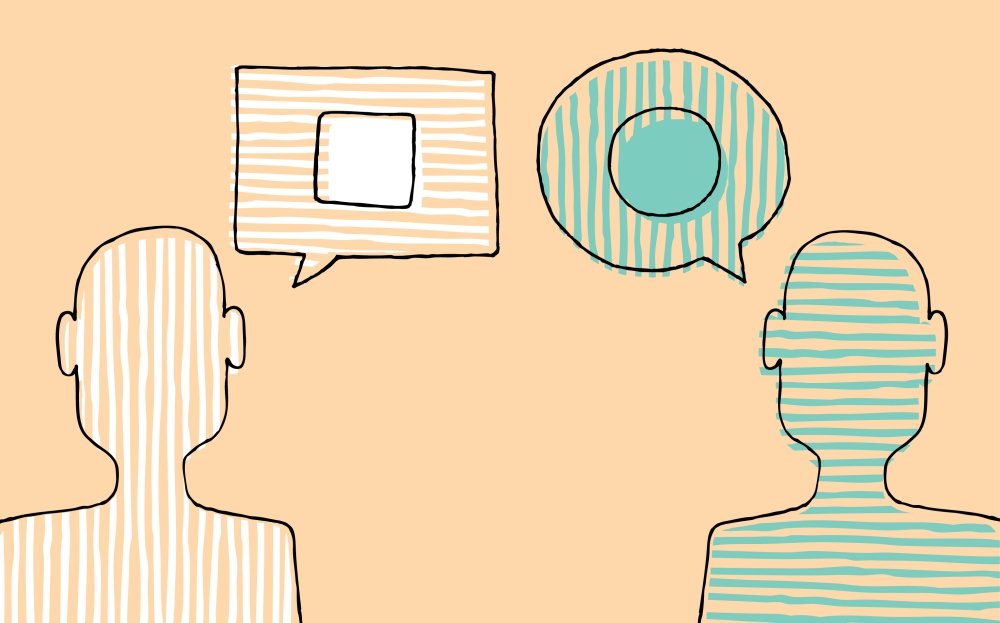
grpahics of people talking with one having a word bubble with a white square and horizontal stripes in it and the other having one with a green circle with vertical stripes

Differences that require discussion and resolution could be situations involving an affair or major value conflicts, for example ones that might affect daily practices or the way you raise children. Couples may sometimes attend counseling to help them work through certain differences as it can often be helpful to have another party serve in the role of mediator to help you talk things over and find that resolution.

Sometimes you might be able to discern your own compromise, such as whose family to spend the holidays with, and other times, the differences between the two of you can be equally positive. If you have unique interests, share them with one another, but also take opportunities to engage in activities on your own or with other friend groups. These approaches help keep the relationship from stagnating.

Spend Quality Time Together

Early on in the relationship, couples often spend lots of time getting to know one another and invest time in building the foundation for the relationship they will have together. Once the relationship is established, however, couples can often get caught up in the business of just living and will forget to make time for dates or for relaxing with one another. The foundation that you build in the beginning must be continuously nurtured throughout the relationship, and you can do this by spending intentional time together. Try to spend time talking every day and schedule special things to do together outside of daily life.

a couple holding each other while sitting on a bench looking at a snowy forest

Final Recommendations

We encourage you to try and adopt the building blocks described below to see if they can help to establish or build a strong relationship. Perhaps start with the one that resonates the most for you and your particular relationship. If you are working to develop a strong relationship or want to improve your relationship and find that you are struggling to do so on your own, then consider couples therapy. A couples counselor can help you to resolve cracks in the foundation of your relationship and usher in stability so that you can experience the most benefit from the work that you and your partner will do together.

Book a Comprehensive Assessment for Building a Strong Relationship

Get Started

Ready to begin your healing journey?

Schedule a Consultation
Dr. Lewis

About Dr. Lewis

Dr. Bliss Lewis, MD

Whatever you’re facing, you don’t have to face it alone. Our compassionate team is here to help.

Start Your Journey Today

Related Topics

  • Repairing Trust and Connection
  • How Anxiety Shows Up in Relationships
  • Boundaries and Emotional Health: Why You Feel Drained
  • Conflict Cycles: Why You Keep Having the Same Fight
  • Parenting Stress and Mental Health: Navigating the Overwhelm
Beata "Bliss" Lewis, M.D.
First Co-Author Image

Author

Beata "Bliss" Lewis, M.D.

Owner

I'm Dr. Beata "Bliss" Lewis, a Harvard-trained psychiatrist specializing in integrative approaches to mental health. I blend traditional psychiatry with functional medicine, incorporating psychotherapy, medications, supplements, functional lab testing, mind-body techniques, and lifestyle interventions to treat the whole person. My training includes adult psychiatry at Columbia and child psychiatry at NYU Child Study Center, with advanced certifications in functional and integrative medicine. I specialize in anxiety, depression, ADHD, and trauma. As a mother of twin elementary school girls, I stay connected to the everyday realities families face.

Reviewed By:

Reviewed By Image

Hayden Reed

Administrative Staff

Ready to begin your healing journey?

Get started with Mind Body Psychiatry

Schedule a Consultation
MIND BODY Psychiatry LOGO White
Facebook Youtube Instagram Mental Health Support tiktok

Join our Newsletter

Join our email list. Subscribers receive exclusive content featuring my best wisdom, resources, and advice to enhance your well-being.


Specialties

  • ADHD
  • Anxiety
  • Bipolar Disorder
  • Depression
  • Grief Therapy
  • Trauma
  • Eating & Body Concerns
  • Relationship Concerns
  • Insomnia Treatment
  • Stress Treatment
  • Women’s Health
  • LGBTQ+ Affirming Therapy
  • ADHD
  • Anxiety
  • Bipolar Disorder
  • Depression
  • Grief Therapy
  • Trauma
  • Eating & Body Concerns
  • Relationship Concerns
  • Insomnia Treatment
  • Stress Treatment
  • Women’s Health
  • LGBTQ+ Affirming Therapy

Browse

  • Home
  • About Us
  • Services
  • Resources
  • Reviews
  • Contact Us
  • Home
  • About Us
  • Services
  • Resources
  • Reviews
  • Contact Us

Contact Info

  • Email: info@mindbody7.com
  • Text: (929) 600-7724
  • Call: (212) 621-7770
  • Brooklyn Office:
    200 Prospect Park West Brooklyn, NY 11215
castle connoly

©2025 Mind Body Psychiatry PC | All Rights Reserved.

  • Terms of Service
  • Privacy Policy
  • Terms of Service
  • Privacy Policy
ADHD Evaluation Form

Creyos+ ADHD Evaluation with 1 hour with a Licensed Clinical Psychologist

Creyos Assessment Form

Computerized Attention and Cognitive Function Assessment

Schedule a Consultation Fees & Insurance

Schedule Your Consultation

Complete the form below and you’ll be redirected to our secure scheduling portal.

We use cookies to ensure that we give you the best experience on our website. If you continue to use this site we will assume that you are happy with it.